
Now Reading: The Legacy of Thomas Andrew Lehrer in Music, Satire, and Mathematics
-
01
The Legacy of Thomas Andrew Lehrer in Music, Satire, and Mathematics

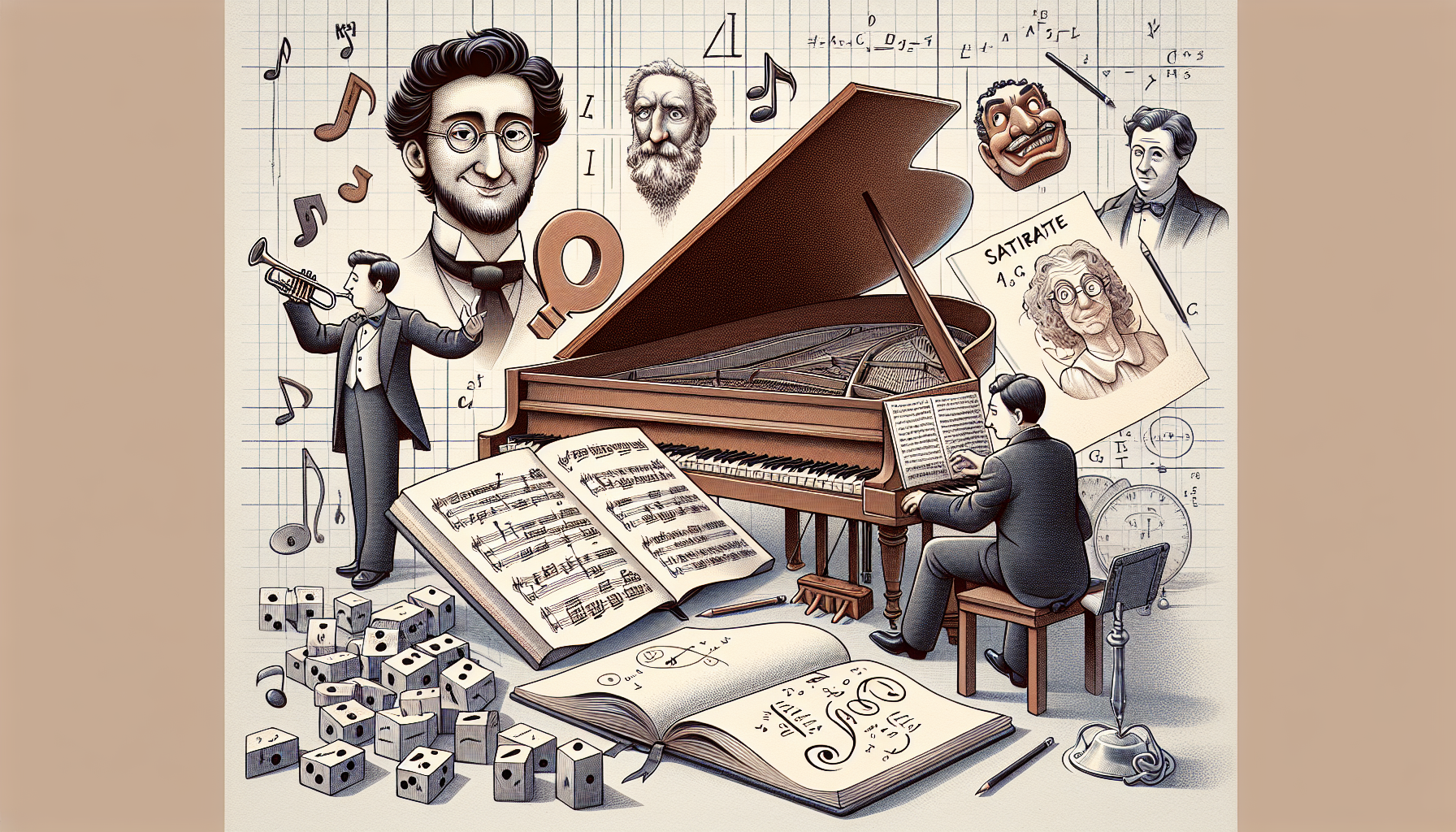

Thomas Lehrer, born in 1928 in New York City, grew up in an academically inclined family that encouraged intellectual curiosity from a young age. Showing exceptional talent, he began studying piano at seven and quickly developed an appreciation for both classical music and comic songwriting. Lehrer’s early years were marked by an affinity for clever wordplay, a skill he honed by listening to famous American humorists and satirists such as Tom Lehrer, Noël Coward, and Flanders and Swann. His exposure to the socially conscious climate of the 1950s and 1960s also played a crucial role in shaping his worldview. As a gifted student, he enrolled at Harvard University at just fifteen, where he pursued studies in mathematics—eventually earning a master’s degree and later teaching at MIT. Surrounded by the creative ferment of postwar America, Thomas Lehrer absorbed influences from a diverse pool of writers, musicians, and thinkers, which fueled his future as an American musician, satir
Musical innovations and comedic style

Lehrer’s reputation as an American musician and satirist grew rapidly in the 1950s and 1960s due to his capacity to blend classical piano proficiency with irreverent comedic flair. His compositions stand out for their unconventional use of melody, surprising chord progressions, and nimble shifts in tempo that mirror the wit embedded in his lyrics. Lehrer’s musical background allowed him to seamlessly parody a variety of established genres, from waltzes to patter songs reminiscent of Gilbert and Sullivan. He was adept at crafting tunes that, while catchy and deceptively simple, frequently offered multilayered jokes accessible only to attentive listeners.
The brilliance of Lehrer’s comedic style lay in the precision of his language and the subtlety of his delivery. Songs such as “Poisoning Pigeons in the Park” and “The Elements” showcase his penchant for intricate rhyme schemes and rapid-fire wordplay. He embraced taboo topics and poked fun at societal norms, creating
Satire and social commentary
Lehrer’s most defining work emerged during the politically charged climate of the 1950s and 1960s, positioning him not just as a clever songwriter but as one of America’s most influential satirists. His pieces often operated as razor-sharp critiques of the prevailing social and political issues of his era. Unafraid to broach controversial subjects, Lehrer skewered everything from nuclear proliferation and educational reforms to religious dogma and racial tensions, using humor as a potent weapon against hypocrisy and complacency. Songs like “Who’s Next?” lampooned the arms race and political brinkmanship, while “National Brotherhood Week” used irony to expose the superficiality of institutional attempts at social harmony.
What set Thomas Lehrer apart was his unique capacity to transform complicated topics into witty, accessible musical commentary, ensuring his political songs resonated with broad audiences. Lehrer’s deadpan delivery and calm demeanor on stage amplified the satirical bite of his lyrics, drawing laughter that
Contributions to mathematics and education
In addition to his prolific career as an American musician and satirist, Thomas Lehrer made considerable strides in the domain of mathematics and education. Having entered Harvard University at the extraordinarily young age of fifteen, Lehrer completed both his undergraduate and graduate studies in mathematics, establishing himself as a serious scholar in the field. He contributed to mathematics not primarily through research publications but through his remarkable ability to communicate complex ideas in an engaging and accessible manner. As a mathematics instructor at both Harvard and MIT during the 1950s and 1960s, Lehrer became renowned for his wit and clarity in the classroom, earning a devoted following among students who appreciated his unconventional approach to teaching.
Lehrer’s unique fusion of mathematics and humor is perhaps best epitomized by his famous song “The Elements,” a rapid-fire recitation of the periodic table set to the melody of Gilbert and Sullivan’s “Major-General’s Song.” By applying musical and comedic techniques to a traditionally dry subject, he
Enduring impact and recognition
Thomas Lehrer’s influence endures across generations of musicians, comedians, and educators, cementing his status as a uniquely multifaceted figure in American culture. As an American musician and satirist, his songs have continued to circulate through recordings, tribute performances, and references in academia and media. Many of his political songs, written during the turbulent 1950s and 1960s, remain strikingly relevant, their sharp wit and incisive critique resonating with new audiences confronting similar social and political issues. Lehrer’s works, such as “The Vatican Rag” and “Pollution,” are often cited as exemplars of the power of satire to provoke thought while entertaining.
In educational circles, Lehrer’s contributions are frequently acknowledged in both mathematics and music instruction. “The Elements” has become a staple in classrooms worldwide, inspiring countless students to approach scientific subjects with curiosity and humor. His teaching legacy at prestigious institutions like Harvard and MIT is remembered fondly by generations of students

Stay Informed With the Latest & Most Important News
Previous Post
Next Post











Advertisement


